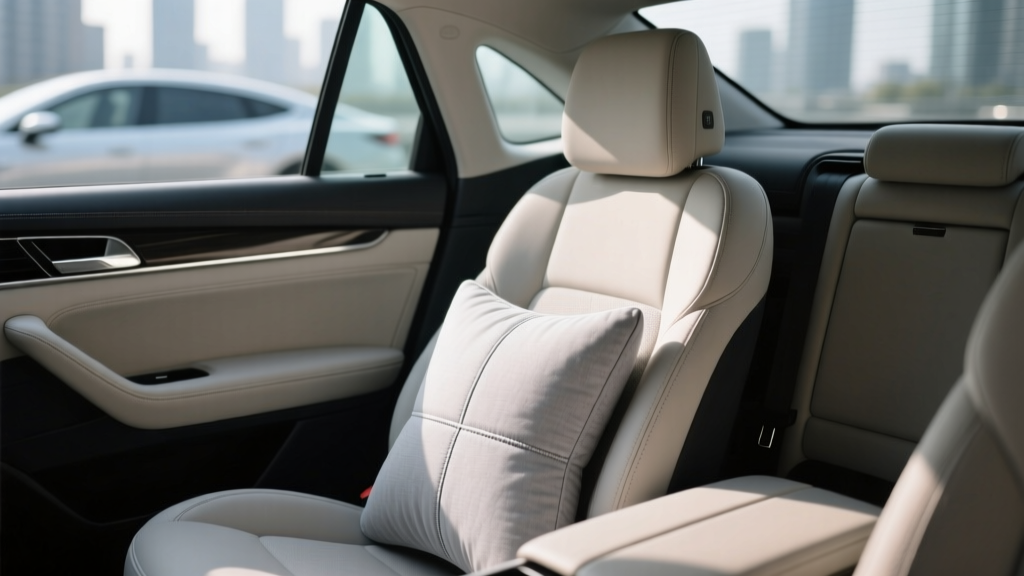
Backrest Cushion for Cars: Best Picks (2026)
Long drives, traffic-heavy commutes, and even short hops across town can take a toll on your back?especially if your seat doesn?t match your body. A quality backrest cushion can transform how your car feels by improving posture, reducing fatigue, and making the cabin more comfortable for daily use.
But not all backrest cushions are created equal. The right choice depends on your vehicle?s seat shape, your height and driving position, and what you?re actually trying to fix?lower back pain, upper-back slouching, heat buildup, or simple lack of support. This guide breaks down the types of backrest cushions, how to measure and fit one properly, and what to avoid so you don?t waste money on something that ends up in the trunk after a week.
Whether you drive a compact hatch, a full-size truck, or a premium SUV, choosing the right back support is one of the most cost-effective interior upgrades you can make.
What a Backrest Cushion Actually Does (and What It Can?t Do)
A backrest cushion is designed to add support where your seat falls short, typically around the lumbar (lower back) region. Many also help with posture by encouraging your spine to maintain a more neutral ?S? curve while driving.
Benefits you can realistically expect
- Reduced lower back strain by filling the gap between your lumbar curve and the seatback.
- Less shoulder and neck tension (often a result of poor lower-back posture).
- Improved comfort on longer drives through better pressure distribution.
- Better driving posture, which can help with control and visibility.
- Improved airflow if you choose ventilated or mesh-backed styles.
What a cushion won?t fix
- Worn-out seat foam that has collapsed severely (a cushion may help, but won?t restore the seat).
- Serious back injuries or medical conditions?use a cushion as comfort support, not treatment.
- Poor driving ergonomics if the seat and steering wheel aren?t adjusted correctly.
Start With Your Goal: Choose a Cushion Based on the Problem
Before shopping, identify what you want the backrest cushion to change. Different designs solve different issues.
1) Lower back pain or lumbar fatigue
Look for:
- Dedicated lumbar cushions (contoured, medium firmness)
- Memory foam or high-density foam with a defined lumbar curve
- Adjustable straps to lock the cushion in the right position
Real-world example: If you drive a midsize sedan with a flat seatback and you feel soreness after 30?45 minutes, a mid-thickness lumbar cushion often helps more than a full-back pad.
2) Upper-back slouching or rounded shoulders
Look for:
- Full backrest cushions that extend toward the shoulder blades
- Ergonomic contouring that supports mid-back, not just lumbar
- Thinner profile if you sit close to the wheel
3) Heat and sweat buildup
Look for:
- Breathable mesh or 3D spacer fabric
- Ventilated bead-style covers (popular in hot climates)
- Cooling gel layers (more common in premium cushions)
4) You share the car with other drivers
Look for:
- Adjustable or modular cushions that can move up/down quickly
- Inflatable lumbar cushions for easy tuning
- Quick-release straps for swapping vehicles
Types of Backrest Cushions (Pros, Cons, and Best Uses)
Lumbar-only cushion
- Best for: Targeted lower-back support, commuting, sporty seats
- Pros: Easy to position, doesn?t change seating distance much, affordable
- Cons: Won?t help much with mid/upper-back posture
Full backrest cushion
- Best for: Flat seatbacks, larger vehicles, drivers who slouch
- Pros: Broader support area, can improve overall posture
- Cons: Can push you forward; may feel bulky in small cabins
Memory foam ergonomic cushion
- Best for: Comfort seekers, long-distance driving, moderate back pain
- Pros: Conforms to your back, good pressure relief
- Cons: Heat retention in cheaper foams; some feel too soft
High-density foam (firmer support)
- Best for: Drivers who want posture correction and firm lumbar hold
- Pros: Stable support, less ?sink? over time
- Cons: Can feel stiff if you?re sensitive or lightweight
Inflatable lumbar cushion
- Best for: Multi-driver cars, fine-tuning lumbar pressure
- Pros: Adjustable firmness; packs small
- Cons: Can shift if not secured; inflation valves can wear
Mesh/ventilated back support
- Best for: Hot climates, ride-share driving, long summer commutes
- Pros: Airflow and temperature comfort
- Cons: Often less structural support than foam designs
How to Choose the Right Size and Shape for Your Seat
Fit is everything. A great cushion in the wrong position can make your posture worse.
Step-by-step: Measure and match a backrest cushion to your car seat
- Measure seatback width at mid-back level. Many cushions range from about 12?18 inches wide; choose one that doesn?t spill over the bolsters.
- Check seatback contour. Sport seats with aggressive bolsters typically work better with slimmer lumbar cushions.
- Find your lumbar height: sit normally, then feel where your lower back curves inward most (usually just above your belt line). That?s where the cushion?s thickest part should land.
- Confirm headrest compatibility. Many cushions use straps that loop around the headrest posts. If your headrest is fixed or tightly integrated, choose a model with alternate anchors or anti-slip backing.
- Test seating distance. A cushion that?s too thick can push you closer to the steering wheel. Make sure you still have:
- A slight bend in your elbows with hands at 9 and 3
- Comfortable leg extension to pedals without locking knees
Vehicle-specific fit tips
- Compact cars: Choose low-profile lumbar cushions to avoid being pushed forward.
- Trucks/SUVs: Full backrest cushions can work well, especially on flatter, wider seats.
- Sports cars: Prioritize slim, firm lumbar support that sits between bolsters.
- Older vehicles: If seat foam is tired, consider pairing a lumbar cushion with a seat base cushion for full posture correction.
Materials and Features That Matter
Two cushions can look similar online and feel completely different in real life. These are the details that separate a worthwhile upgrade from a gimmick.
Foam quality (support vs. comfort)
- Memory foam: Best for pressure relief; choose breathable covers to reduce heat.
- High-density foam: Better structure and posture support; less ?sink.?
- Cheap soft foam: Often collapses quickly and can create an awkward hump.
Cover fabric
- Mesh / spacer knit: Great airflow; ideal for warm climates.
- Polyester blends: Durable and easy to clean.
- Leatherette covers: Looks upscale but can trap heat; better for cooler regions.
Stability features
- Dual adjustable straps prevent sliding during cornering and braking.
- Non-slip backing helps on smooth upholstery (especially leather seats).
- Contoured edges reduce pressure points against the spine.
Maintenance and cleanliness
- Choose a removable, washable cover if you commute daily, have pets, or carry kids.
- For ride-share or work vehicles, prioritize stain-resistant materials.
Step-by-Step: How to Install and Position a Backrest Cushion Correctly
- Set your seat first: adjust seat height, tilt, distance to pedals, and steering wheel reach. Don?t ?fit the car? around a cushion?do it the other way around.
- Place the cushion at lumbar level: the thickest part should fill the inward curve of your lower back, not press into your mid-back.
- Secure the straps: loop around headrest posts or seatback (depending on design). Tighten until stable but not bending the cushion unnaturally.
- Take a 10-minute test drive: pay attention to:
- Any new pressure points
- Shoulder tension (often a sign the cushion is too high)
- Feeling pushed too close to the wheel (cushion too thick)
- Fine-tune: move it up or down in small increments (even 1?2 cm can change everything).
Practical tip: If you feel great at first but sore after a week, the cushion may be too aggressive. Many drivers do better with moderate support that encourages natural posture instead of forcing it.
Product Recommendations: Which Backrest Cushion Style Fits Your Needs?
Instead of pushing one ?best? cushion for everyone, use this quick comparison to narrow your options. Look for these traits when browsing car backrest cushion listings.
Best overall for most drivers: Contoured memory foam lumbar cushion
- Why it works: Balanced comfort and support, easy to fit in most vehicles
- Look for: Medium firmness, breathable washable cover, dual straps
Best for posture correction: Firm high-density lumbar support
- Why it works: Holds shape better and supports long-term alignment
- Look for: Defined contour, non-slip base, not overly thick
Best for hot climates: Mesh ventilated back support
- Why it works: Reduces sweat and ?stuck-to-the-seat? discomfort
- Look for: Sturdy frame or tensioned mesh, reliable strap system
Best for shared vehicles: Inflatable lumbar cushion
- Why it works: Fast adjustability for different body types
- Look for: Durable valve, anti-slip backing, easy reach to inflation bulb/port
Best for older, flat seats: Full backrest cushion with lumbar emphasis
- Why it works: Adds support across a larger area when the seat itself is tired
- Look for: Slim upper section, reinforced lumbar zone, breathable cover
Common Mistakes to Avoid
- Buying the thickest cushion thinking it equals more comfort. Too much thickness pushes you forward and can strain shoulders and neck.
- Placing lumbar support too high. If it?s in your mid-back, it can exaggerate arching and cause discomfort.
- Ignoring seat bolsters. Wide cushions can ride on bolsters, shift around, and feel unstable?especially in sporty seats.
- Not adjusting the seat after installing. A cushion changes your position; re-check steering reach, mirror angles, and headrest alignment.
- Assuming one cushion will fit every car. A cushion that works in an SUV may feel bulky in a compact car.
- Overlooking cover material. If you drive in heat, a non-breathable cover can make the seat feel worse.
FAQ: Backrest Cushions for Cars
Do backrest cushions help with lower back pain?
They can, especially if your pain is related to posture, long sitting, or insufficient lumbar support. Choose a contoured lumbar cushion with medium firmness and place it at the natural curve of your lower back. If pain is severe or persistent, consider checking driving ergonomics and speaking with a medical professional.
What?s the difference between a lumbar cushion and a full backrest cushion?
A lumbar cushion targets only the lower back and is typically smaller and easier to position. A full backrest cushion supports a larger area (mid-back and sometimes shoulders), which can help with slouching but may feel bulkier in smaller vehicles.
Will a backrest cushion make me sit too close to the steering wheel?
It can if it?s too thick. If you notice your elbows are overly bent, shoulders feel cramped, or you?re leaning forward, switch to a slimmer cushion or adjust seat distance and steering reach to restore a safe driving position.
Are mesh back supports as supportive as foam cushions?
Mesh supports are excellent for airflow and can provide light posture help, but they usually don?t offer the same structured lumbar ?fill? as a quality foam cushion. If your main issue is support, foam tends to work better; if heat is the issue, mesh is often the better pick.
How do I stop my backrest cushion from sliding?
Use a cushion with dual adjustable straps and non-slip backing. Tighten straps evenly and make sure the cushion sits against the seatback fabric?not perched on bolsters. If your seat material is very slick (like leather), anti-slip backing makes a noticeable difference.
Can I use a backrest cushion with heated or ventilated seats?
Yes, but expect reduced effectiveness. A thick foam cushion can block airflow from ventilated seats and dampen heat transfer from heated seats. If seat ventilation is a priority, choose a mesh or thinner design.
Wrap-Up: Your Next Steps for a More Comfortable Drive
Choosing the right backrest cushion comes down to matching the cushion type to your goal, confirming fit with your seat shape, and positioning it correctly at lumbar level. If you?re not sure where to start, a contoured lumbar cushion with breathable fabric and adjustable straps is a solid choice for most vehicles and driving styles.
- Identify your main issue (lumbar pain, slouching, heat, shared vehicle use).
- Choose a cushion style that matches that issue.
- Measure your seatback and confirm strap compatibility.
- Install, test drive, and fine-tune the height by small increments.
For more practical car comfort upgrades, fitment tips, and interior-focused buying guides, explore the latest articles on carinteriormix.com.